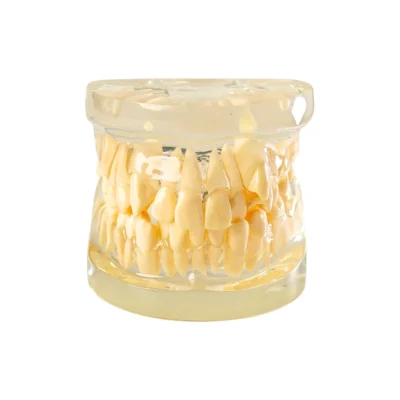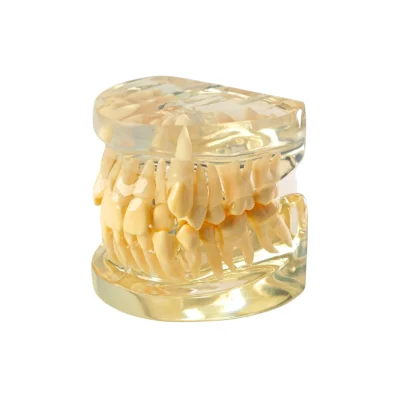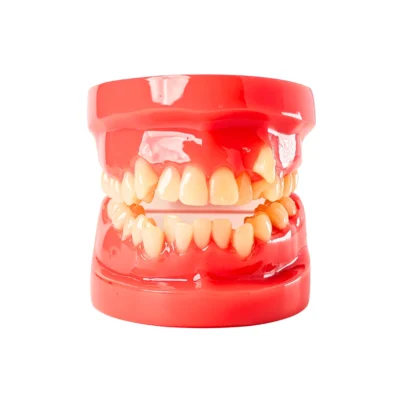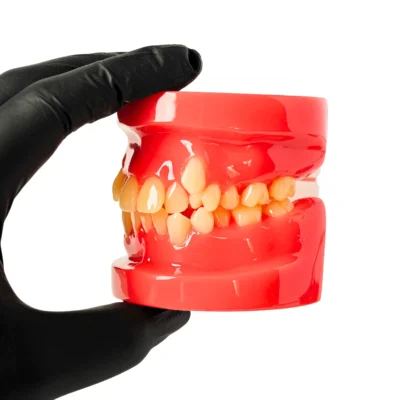
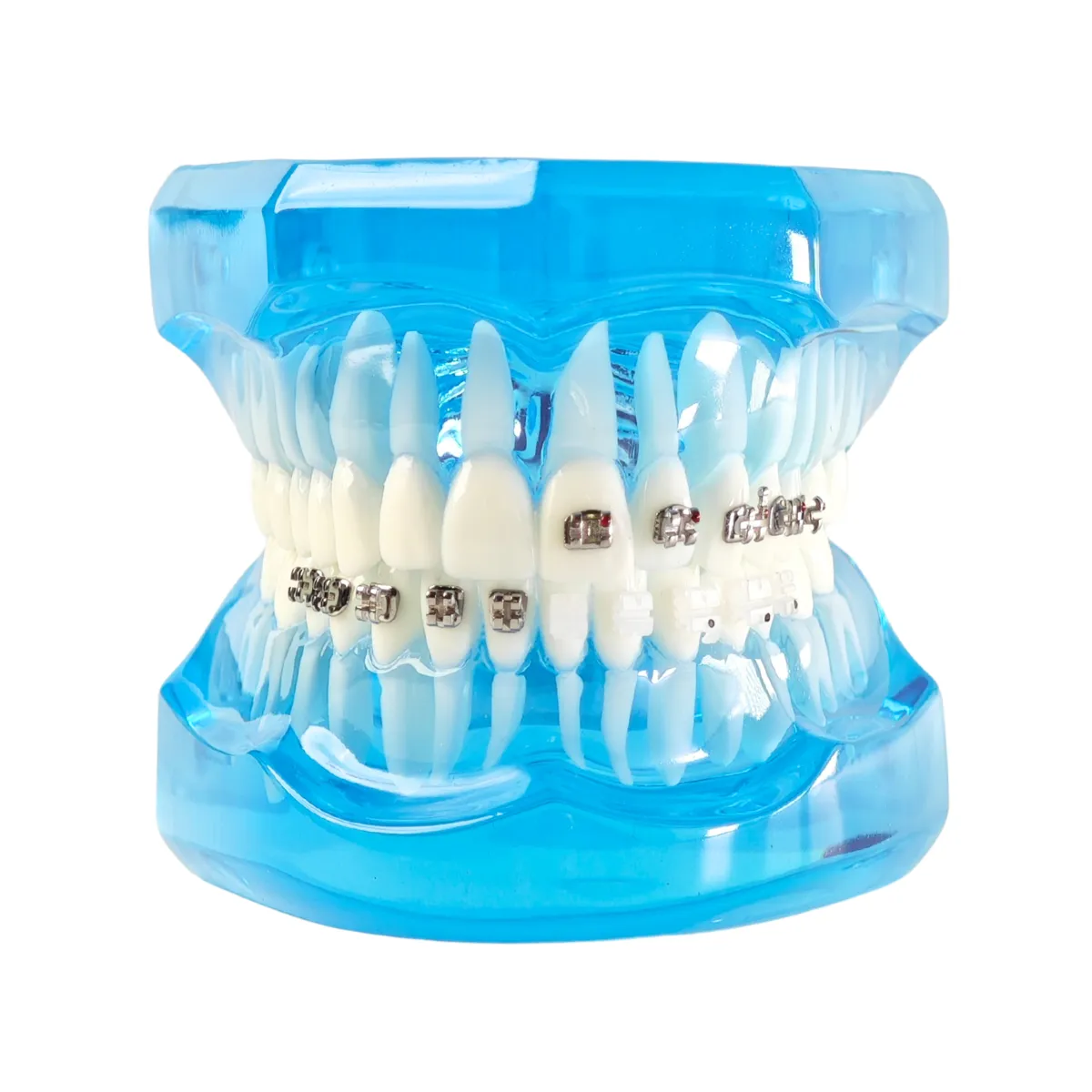
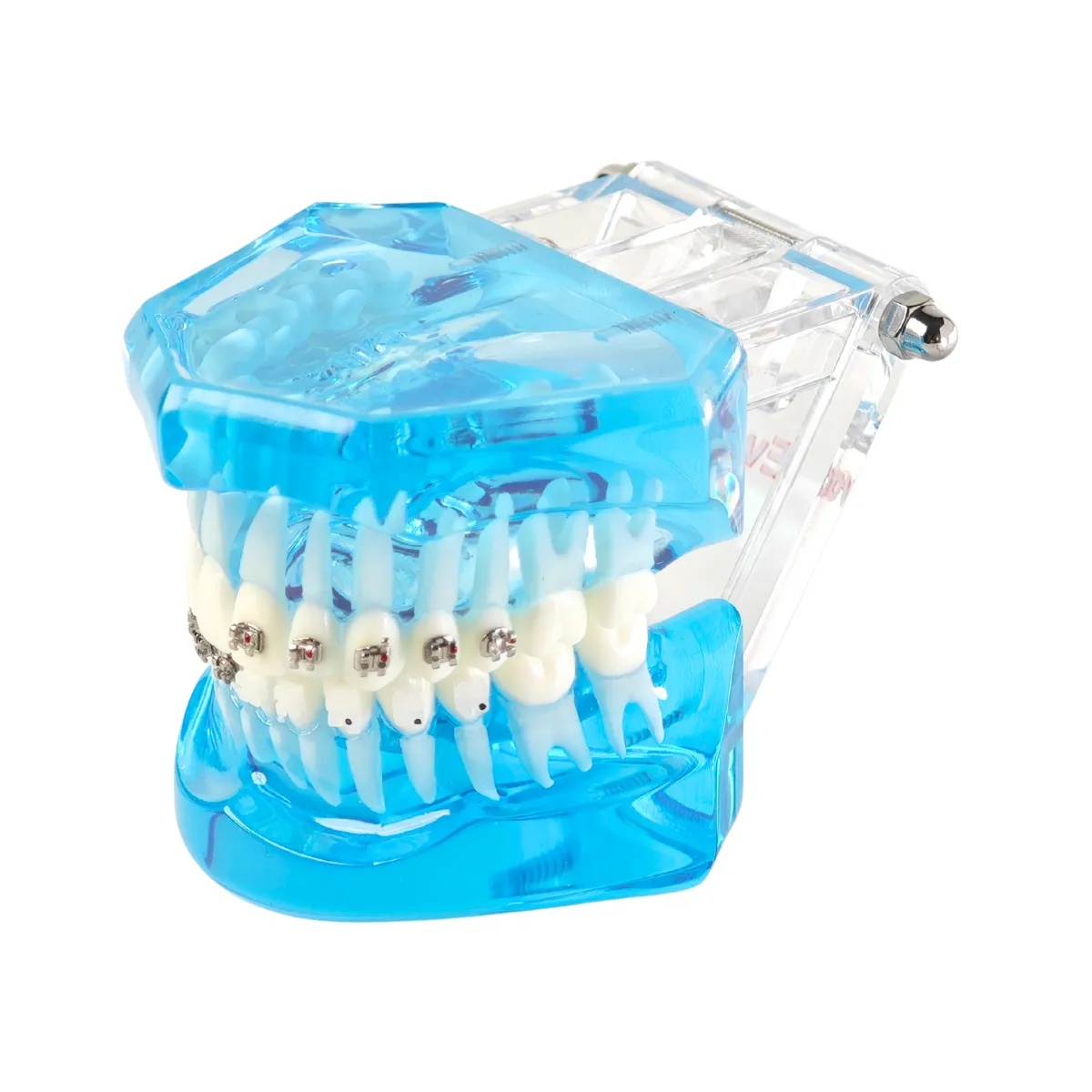
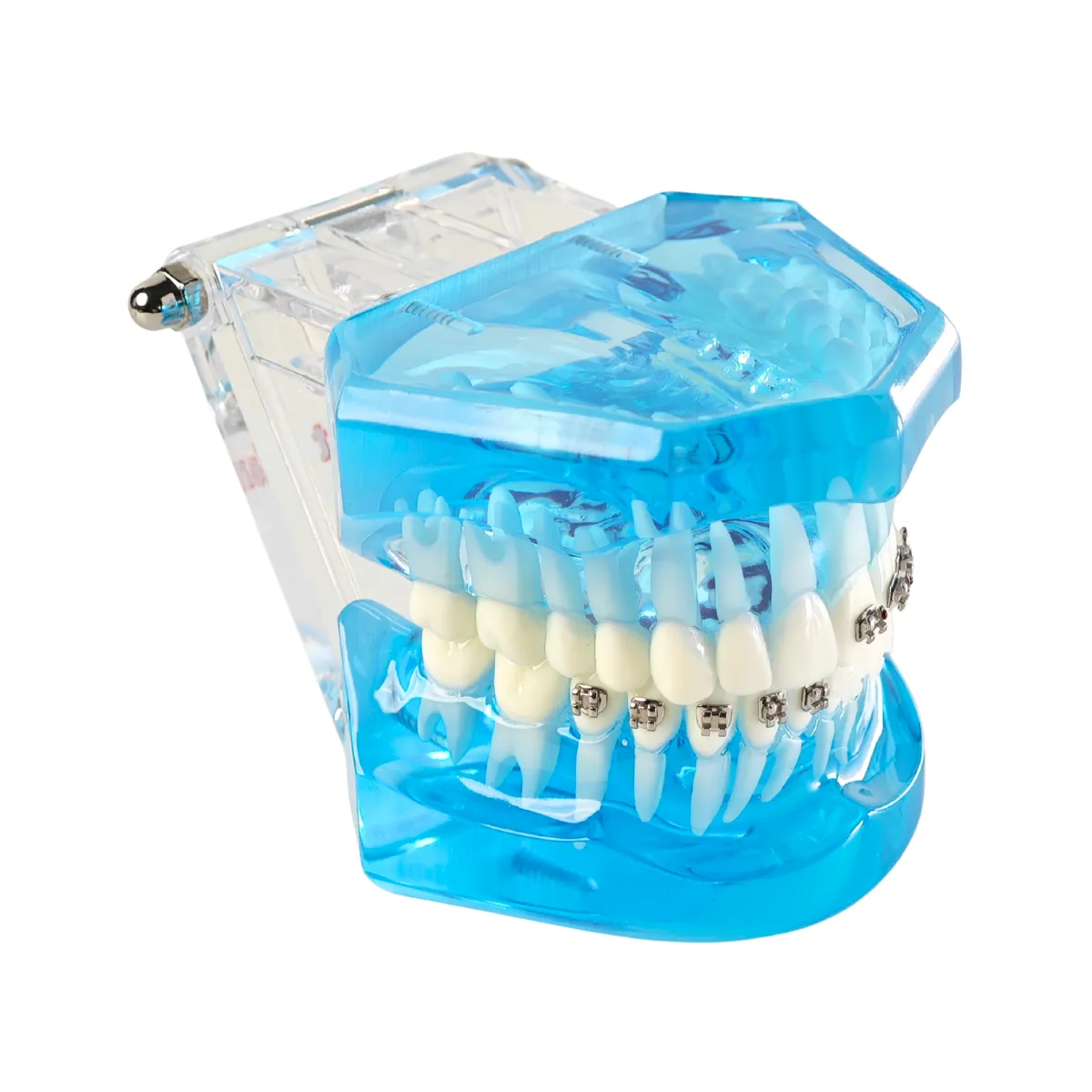
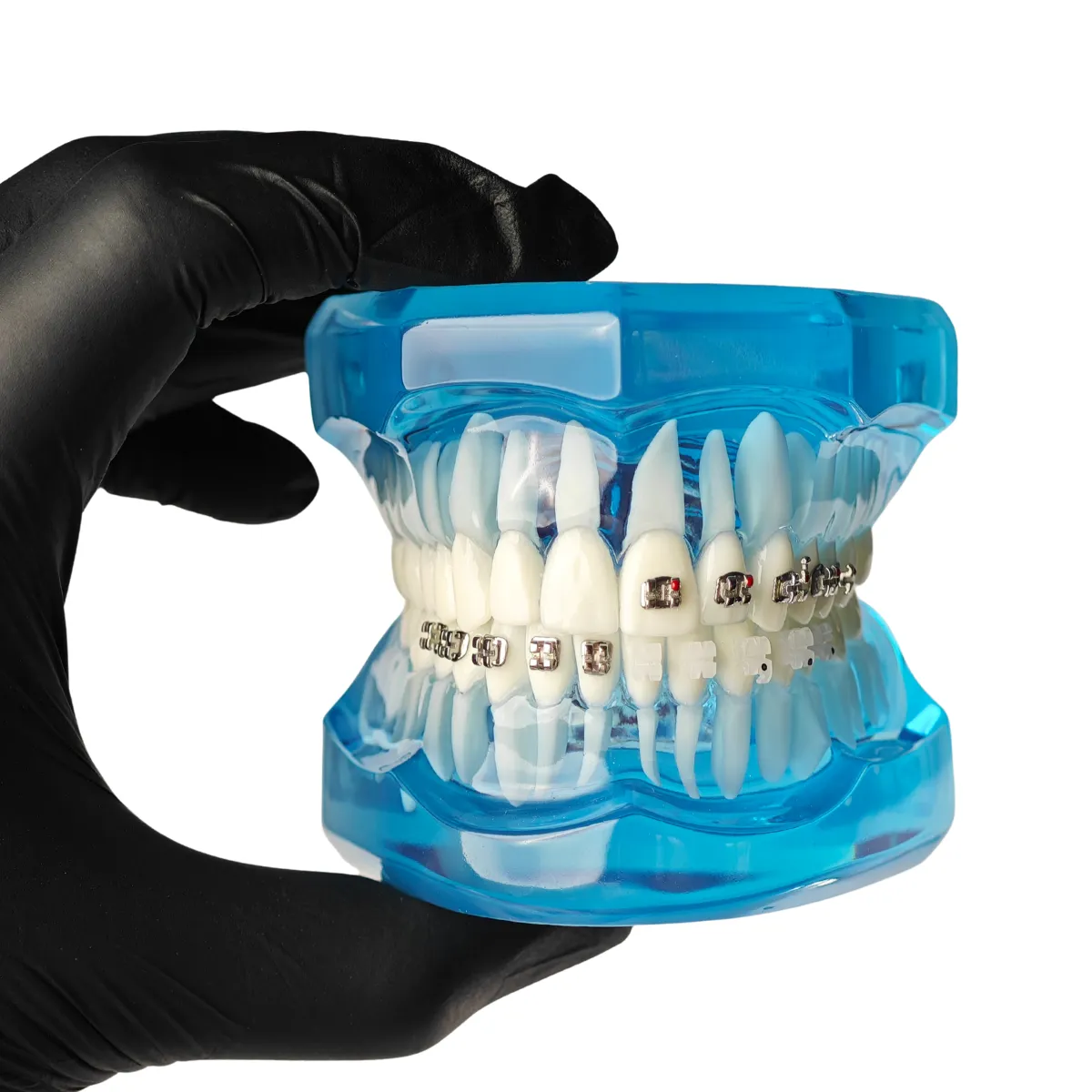
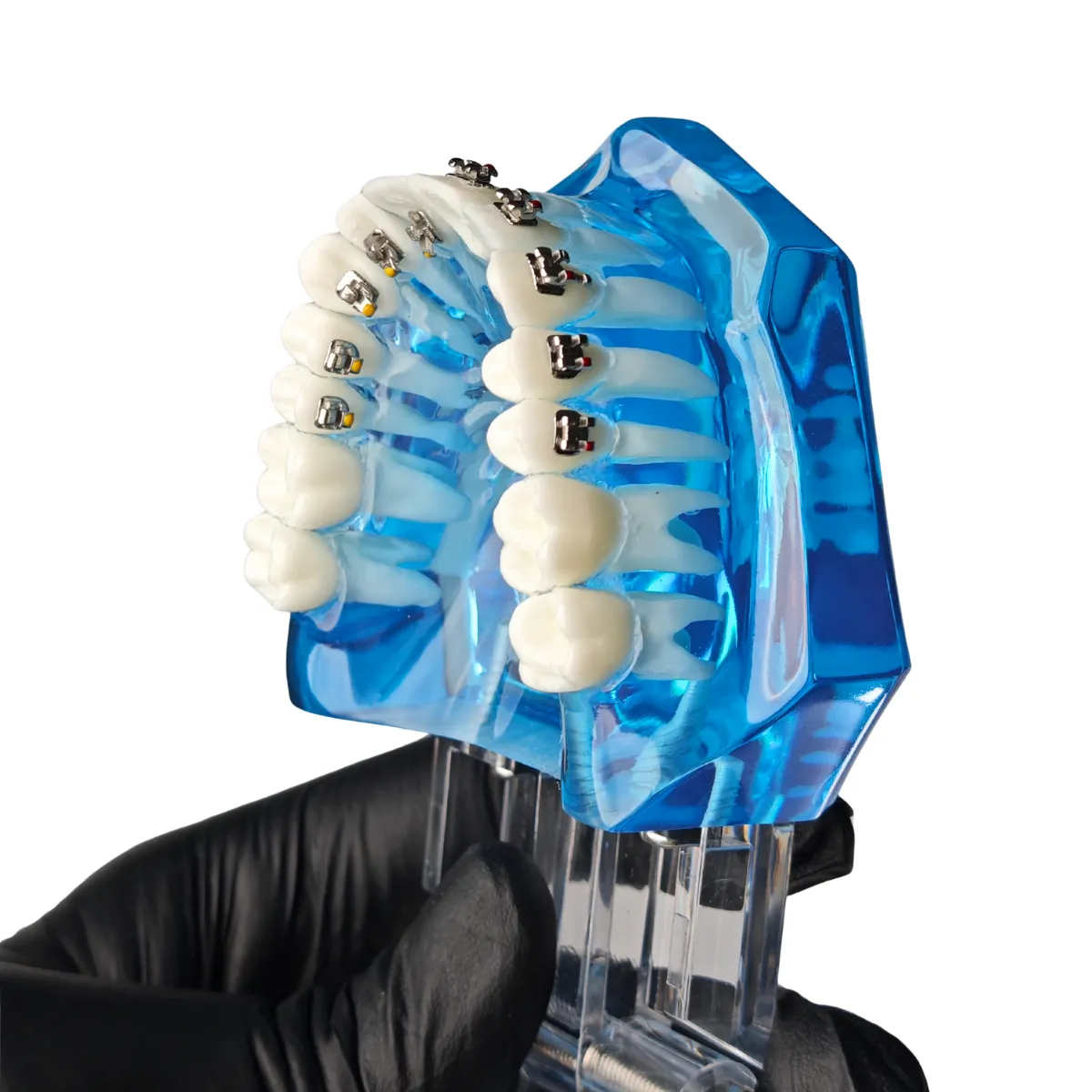
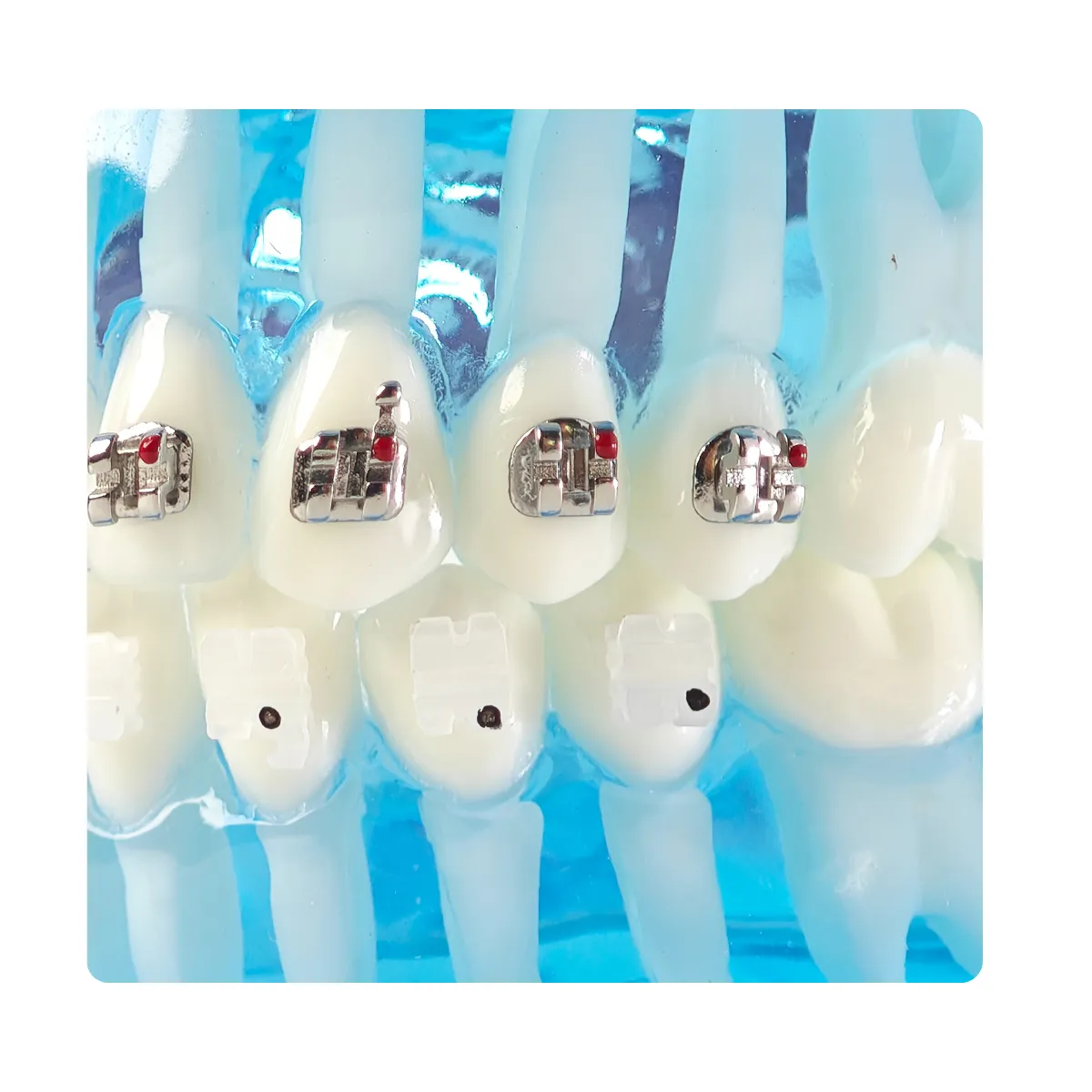
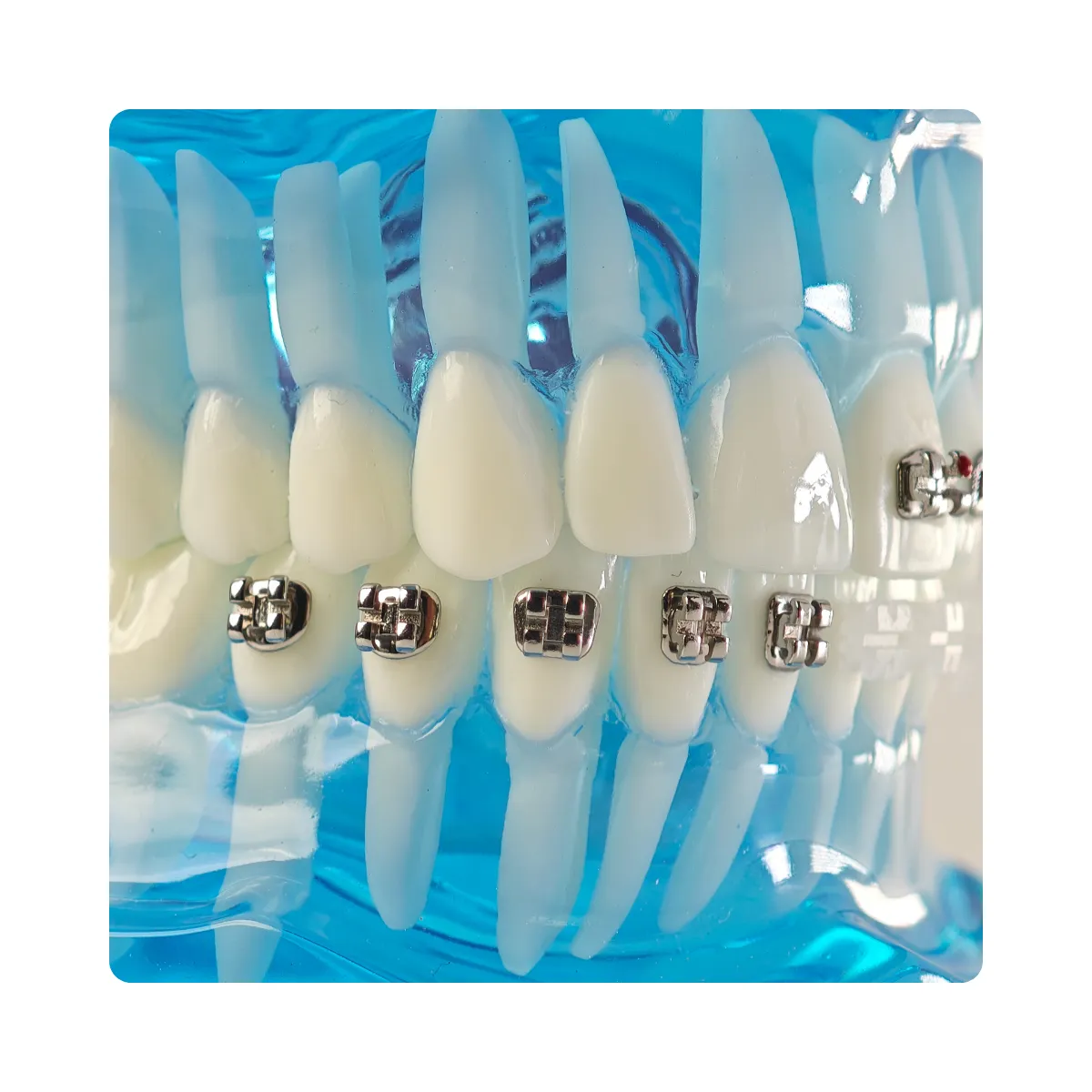
Evodent Three in One Orthodontic Bracket Model for Metal, Ceramic and Lingual Braces Demonstration
Original price was: ₹10,000.00 INR.₹4,500.00 INRCurrent price is: ₹4,500.00 INR.
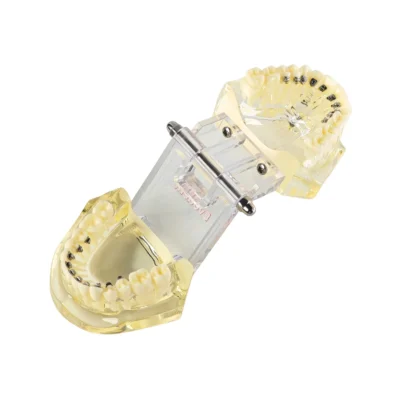
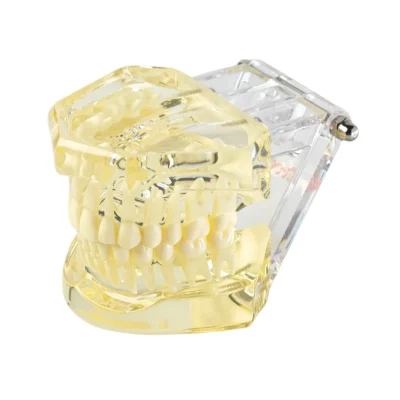
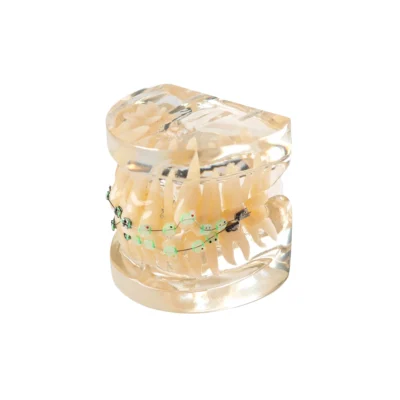
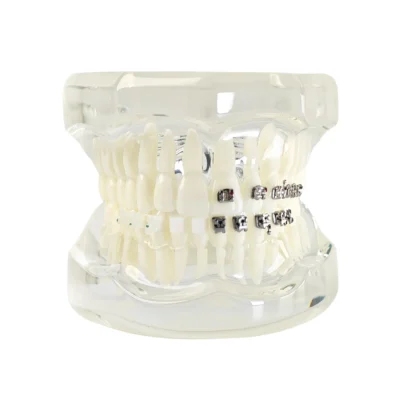
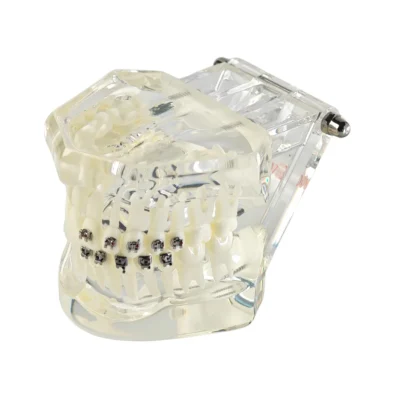
Evodent three in one orthodontic bracket model for patient education, showing metal brackets, ceramic brackets and lingual brackets in one braces demonstration model.
Shipping & Benefits
- International shipping available
- Tracking details shared by email
- Trusted by dental professionals worldwide
Description
Evodent Three in One Orthodontic Bracket Model is a patient education model for explaining metal brackets, ceramic brackets and lingual brackets in one clear chairside demonstration. It helps orthodontists, dentists and treatment coordinators show patients how three different fixed braces options look, where the brackets are placed and why visibility differs between them.
This is not a self-ligating bracket model. It is a braces comparison model for clinics that want one physical display to explain standard metal braces, tooth-coloured ceramic braces and hidden lingual braces during consultation.
What This Three in One Orthodontic Bracket Model Shows
The model brings three common fixed orthodontic bracket options into one demonstration tool. This makes it easier for patients to compare appearance and placement without switching between separate models or relying only on photos.
- Metal brackets: Traditional visible brackets used in fixed orthodontic treatment.
- Ceramic brackets: Tooth-coloured brackets for patients who want a less noticeable option.
- Lingual brackets: Brackets placed on the inner side of the teeth for a more hidden braces option.
- Bracket visibility: Helps patients compare what can be seen from the front.
- Bracket position: Explains why lingual brackets are placed differently from conventional brackets.
Why This Model Is Useful During Braces Consultation
Most patients understand braces better when they can see the options physically. This model gives a quick visual answer to common consultation questions such as “Will ceramic braces be less visible?” or “Where do lingual braces go?”
- Helps patients compare metal, ceramic and lingual braces side by side.
- Makes appliance selection easier before discussing treatment fees or timelines.
- Supports patient communication for adults, teenagers and parents.
- Reduces confusion between cosmetic bracket options and hidden bracket options.
- Works well for treatment coordinators during case presentation.
Metal Bracket Demonstration
Metal brackets are the most familiar fixed braces option. This section of the model helps patients understand the standard braces appearance and why metal brackets remain a common choice for orthodontic treatment.
Ceramic Bracket Demonstration
Ceramic brackets are used when patients want a less noticeable option on the front teeth. By comparing ceramic brackets directly with metal brackets, patients can judge the visual difference more easily during consultation.
Lingual Bracket Demonstration
Lingual brackets are placed on the tongue-side surface of the teeth. Many patients do not understand this until they see a model. This section helps explain why lingual braces are more hidden from the front and why their placement feels different from conventional brackets.
Common Patient Questions This Model Can Answer
- “What is the difference between metal and ceramic braces?”
- “Are ceramic braces really less visible?”
- “Where are lingual braces placed?”
- “Can braces be placed behind the teeth?”
- “Which option will look more discreet?”
- “Why do bracket systems look different?”
Best Use in an Orthodontic Clinic
Use this model before final appliance selection. Patients usually make better decisions when they understand appearance, placement and visibility first, then discuss suitability, cost and treatment plan with the clinician.
- Keep it in the consultation room or treatment coordinator area.
- Use it during first braces consultation.
- Show metal and ceramic brackets together for direct comparison.
- Turn the model to explain lingual bracket placement behind the teeth.
- Use it during parent counselling for teenagers considering braces.
Who Should Use This Model
- Orthodontists: For explaining braces options during appliance selection.
- Dental clinics: For patient education before orthodontic referral or treatment discussion.
- Treatment coordinators: For comparing bracket options during case presentation.
- Consultation rooms: As a fixed visual aid for braces and aligner alternative discussions.
Technical Specifications
- Product type: Three in one orthodontic bracket patient education model
- Bracket types shown: Metal brackets, ceramic brackets and lingual brackets
- Self-ligating bracket: Not included
- Demonstration focus: Bracket appearance, bracket placement and visibility comparison
- Primary use: Braces consultation and orthodontic patient education
- Clinical use: Explaining fixed braces options before appliance selection
- Patient education use: Helps compare visible, tooth-coloured and hidden bracket options
- Bracket position shown: Labial / front-side brackets and lingual / inner-side brackets
- Best for: Orthodontists, dentists, treatment coordinators and consultation rooms
- Not intended for: Bracket bonding practice, wire bending practice or orthodontic force simulation
- Training category: Orthodontic consultation and chairside demonstration model
FAQs – Evodent Three in One Orthodontic Bracket Model
Q. What does the Evodent Three in One Orthodontic Bracket Model show?
A. It shows metal brackets, ceramic brackets and lingual brackets in one orthodontic patient education model.
Q. Is this a self-ligating bracket model?
A. No. This is not a self-ligating bracket model. It is a three-option braces demonstration model showing metal, ceramic and lingual brackets.
Q. What is this model used for?
A. It is used during braces consultations to explain bracket appearance, bracket placement and visibility differences between metal, ceramic and lingual braces.
Q. How does this model help explain ceramic brackets?
A. It lets patients compare ceramic brackets with metal brackets directly, making the difference in appearance easier to understand.
Q. How does this model help explain lingual brackets?
A. It shows that lingual brackets are placed on the inner side of the teeth, which helps patients understand why they are less visible from the front.
Q. Who should buy this orthodontic bracket model?
A. It is best for orthodontists, dentists, treatment coordinators and clinics that explain braces options to patients.
Q. Is this model mainly for patient education?
A. Yes. This is mainly a chairside patient education model for orthodontic consultation rooms and braces option discussions.
You may also like…
- Sale!

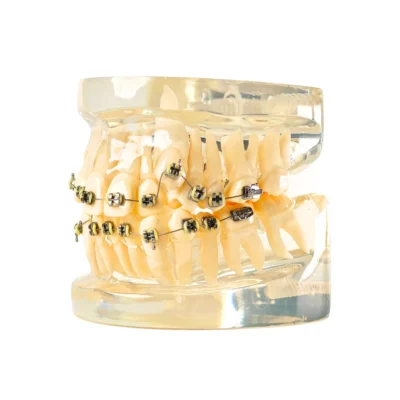
Evodent Signature Dental Malocculation Model with Metal Bracket, Patient Education Model
Original price was: ₹6,000.00 INR.₹3,495.00 INRCurrent price is: ₹3,495.00 INR. - Sale!
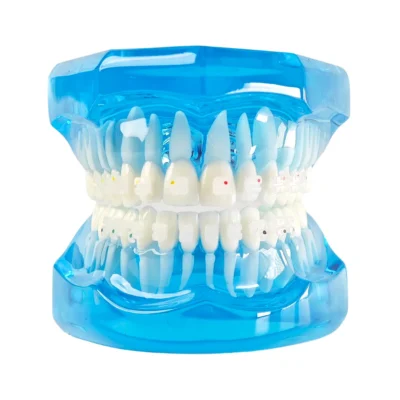
Evodent Orthodontic Model with Ceramic Brackets for Patient Education Model
Original price was: ₹5,000.00 INR.₹2,495.00 INRCurrent price is: ₹2,495.00 INR. - Sale!
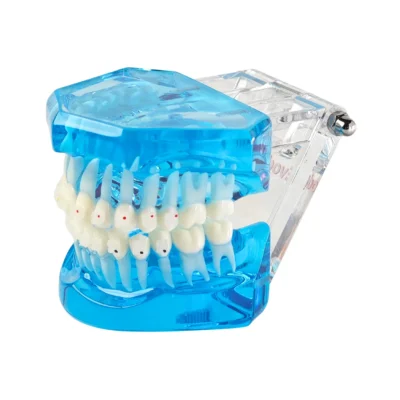
Evodent Signature Half Metal Half Ceramic Orthodontic Model – Metal vs Ceramic Orthodontic Brackets Demonstration Model for Patient Education
Original price was: ₹10,000.00 INR.₹4,495.00 INRCurrent price is: ₹4,495.00 INR. - Sale!
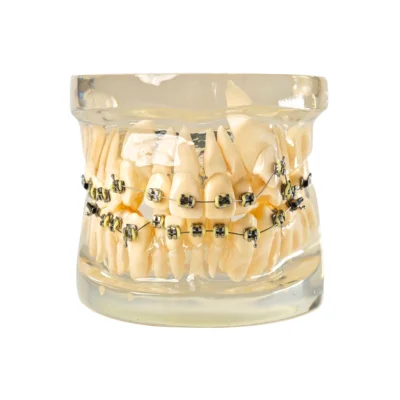
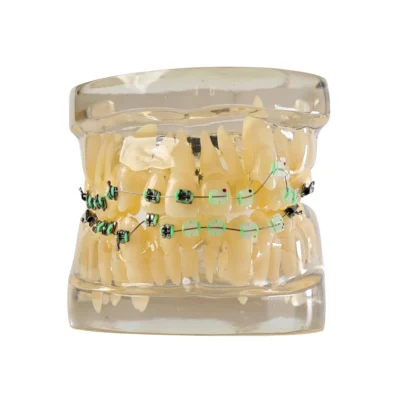
Evodent Four in One Orthodontic Bracket Types Demonstration Model – Metal, Ceramic, Self-Ligating & Lingual Braces
Original price was: ₹10,000.00 INR.₹4,995.00 INRCurrent price is: ₹4,995.00 INR.
Related products
- Sale!
Evodent Class I Malocclusion Dental Model ? Orthodontic Occlusion Demonstration Model for Patient Education
Original price was: ₹5,000.00 INR.₹2,775.00 INRCurrent price is: ₹2,775.00 INR. - Sale!
Evodent Class I Malocclusion Orthodontic Model for Patient Education, Pink
Original price was: ₹5,000.00 INR.₹2,775.00 INRCurrent price is: ₹2,775.00 INR. - Sale!
Evodent Lingual Bracket Orthodontic Model Lingual Orthodontic Demonstration Model for Patient Education
Original price was: ₹10,000.00 INR.₹3,495.00 INRCurrent price is: ₹3,495.00 INR. - Sale!
Evodent Primary Teeth with Apex for Orthodontic Practice, Pediatric Dental Training Teeth Set, Pedodontic Dentition Model for Patient Education
Original price was: ₹8,000.00 INR.₹1,995.00 INRCurrent price is: ₹1,995.00 INR.