
What Is a Dental Model?
A dental model is a physical model of teeth or jaws used mainly to explain dental problems and treatments to patients and helps students to practice procedures safely. In simple terms, a dental model makes dental problems easy to explain to patients. At Evodent, dental models are designed first for…
A dental model is a physical model of teeth or jaws used mainly to explain dental problems and treatments to patients and helps students to practice procedures safely.
In simple terms, a dental model makes dental problems easy to explain to patients.
At Evodent, dental models are designed first for patient understanding and for pre-clinical training.
Most people cannot imagine what is happening inside their mouth just by hearing words like root canal, crown or bone loss. A dental model solves this problem by showing it clearly. Showing helps patients to understand.
Why Dental Models Are Mostly Used
Even though dental models are also used for practice and training, their most common and most important use is patient education.
Dental models help dentists:
- Show where the problem is
- Explain what treatment will be done
- Help patients understand why treatment is needed
When patients can see the problem, they feel more confident and less confused. In most clinics, a dental model is used more often during consultation than during actual treatment.
Dental Models for Patient Education
Patient education models or study models are dental models used to explain treatment to patients during consultations.
For example, when a patient hears “root canal,” most imagine pain. When they see a model, they immediately understand where the problem is and what will be done.
They are commonly used to explain:
- Tooth decay and cavities
- Root canal treatment
- Crowns, bridges and implants
- Gum disease and bone loss
- Tooth alignment and bite problems
- Orthodontic treatment
Instead of long explanations, dentists can simply point to the model and explain in a few seconds. This saves time and improves trust, thus resulting in higher treatment acceptance.
Why Patient Education Models Matter
When patients understand:
- They ask better questions
- They feel less anxious
- They are more likely to agree to treatment
- Consultations become shorter and more effective
- A simple dental model often explains more than a long conversation
This is why many dental clinics keep dental models on the consultation table.
A Quick Reality Check
Most patients don’t understand dental terms. They understand pictures. Dental models bridge that gap.
Evodent dental models are specifically designed for clear patient explanation with simple anatomy and strong visual contrast, so patients understand faster.
Dental Models for Practice and Training
Dental models are also used for practice especially by:
- Dental students
- Interns
- Dentists learning new procedures
However for hands on practice, special training models like typodonts and procedure-specific dental models are used.
Types of Dental Models Explained
Dental models come in many forms but in real life, dentists and colleges usually work with a few practical ones, depending on what they want to explain or practice.
Below are the most common dental models used in dental clinics, colleges and training institutes.
All in One Dental Models
All in one dental models show the full set of teeth and jaws together. They are the most commonly used models because they can explain many dental problems using just one model. Compared to single tooth models, all in one models give patients a better overall picture of their mouth.
These models are usually used to explain:
- Tooth positions
- Implants
- Crowns & Bridges
- Cavity & pulp chamber
- Nerve supply
- Impacted teeth
- Gingival recession
- Root Canal
- Missing teeth
- Basic treatment plans
If a clinic wants one model that does most of the talking, this is usually it.
Evodent all in one dental models are designed for daily chairside use making them ideal for patient education. View Evodent All in One Dental Models.
Orthodontic Models
Orthodontic dental models show teeth alignment and bite relationships.
They are commonly used to explain:
- Braces
- Aligners
- Malocclusion
- Bite correction
These models help answer questions like:
“How will my teeth move?”
“Why do I need braces or aligners?”
Evodent orthodontic models clearly show tooth movement and are widely used in orthodontic consultations. Check out Evodent Orthodontic Models.
Root Canal Models
Root canal models are used to explain root canal treatment clearly and visually.
These models usually show:
- Single and multiple canals
- Canal shape and direction
- Color-coded roots for easy explanation
For many patients, root canal treatment sounds confusing or scary. A root canal model helps dentists show the problem instead of just describing it.
Most clinics keep a root canal model specifically for patient education and Evodent root canal models are designed for clear step by step explanation. Check Evodent Root Canal Models.
Implant Models
Implant dental models are used to explain dental implants and implant placement.
They typically show:
- Implant screw
- Crown & FPD
- Jaw bone structure
Implant treatment is hard to explain using words alone. Implant models help patients understand:
- Where the implant goes
- How it supports the crown
- Why bone support is important
Evodent implant models are commonly used during implant consultations to clearly explain the treatment process. Here’s a link to Evodent Implant Models.
Pediatric Dental Models
Pediatric dental models are made for children and parents.
These models are used to:
- Explain treatment to parents
- Explain primary and permeant dentation to parents
- Help children feel comfortable
- Show brushing and oral care
Pediatric models are especially useful because children understand better when they can see and touch.
Evodent pediatric dental models are designed to make dental explanations easier for both children and parents. Checkout Evodent Pediatric Models.
Dental Anatomy Models
Dental anatomy models focus on what is happening inside the tooth.
These models often show:
- Enamel, dentin and pulp
- Nerves and canals
- Tooth structure in a cut or sectioned view
They are mainly used when patients ask: “What exactly is wrong inside my tooth?”
Dental anatomy models are extremely useful for explaining:
- Cavities
- Tooth pain
- Why a root canal is needed
Evodent dental anatomy models are commonly used during consultation to make internal tooth problems easy to understand. Evodent Dental Anatomy Models, click here to check them out.
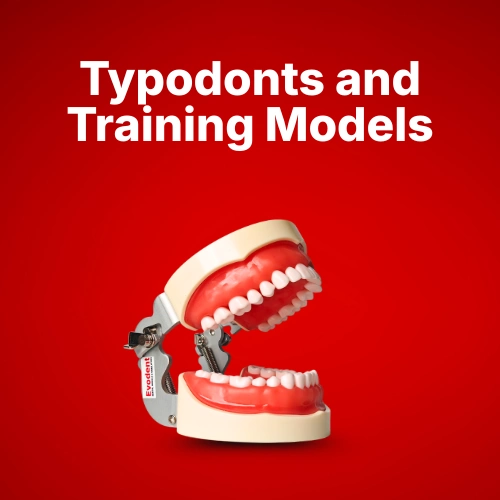
Typodonts and Training Models
Typodonts and training models are mainly used for practice, not patient explanation.
They are commonly used by:
- Dental students
- Interns
- Dental collages & Training institutes
These models allow users to:
- Practice procedures
- Repeat treatments safely
- Learn hand movements
Unlike patient education models, typodonts are designed for hands on work not for chairside explanation.
Evodent typodonts and training models are built for repeated practice and long-term training use. Check Evodent Typodont & Training Models.
Dental Models vs Training Models Explained like a 5 Year Old
- Dental models → Mostly used to explain treatment to patients
- Training models → Mostly used to practice dental procedures
Both are important but they are used for different reasons.
|
Dental Model |
Training Model |
|---|---|
|
Explains treatment |
Practices treatment |
|
Used with patients |
Used by students |
|
Chairside |
Lab / pre-clinical |
Using the wrong model makes dentistry harder to explain. Using the right one makes everything simpler.
Why Dental Models Are Still Used Everywhere
Even with videos, X-rays and digital scans, dental models are still widely used because:
- They are physical and easy to understand
- Patients can touch and see them
- They work for all age groups
- They do not require technology
A simple model on the table often explains more than a screen full of images.
Who Needs a Dental Model?
Dental models are useful for:
- Dental clinics: to explain treatment and improve patient trust
- Dental students: to understand teeth and practice safely
- Dental colleges: for teaching and demonstrations
- Pediatric dentists: to explain treatment to children and parents
- Implant and orthodontic clinics: to explain complex procedures
Why Clinics Usually Keep More Than One Dental Model?
Most clinics use multiple dental models to explain different types of treatment to patients. Specialized clinics may use more than one model.
- One general model (like an all-in-one model)
- A few problem-specific models – root canal, orthodontic implant or anatomy model
This allows dentists to explain both basic and complex treatments clearly.
FAQs
Final Thought
Dental models exist to make dentistry easier to understand.
They help patients feel informed and confident and they help dentists explain treatments clearly and practice safely.
Once you understand what a dental model is, it becomes easier to understand why different types exist and how each one is used for a specific purpose.