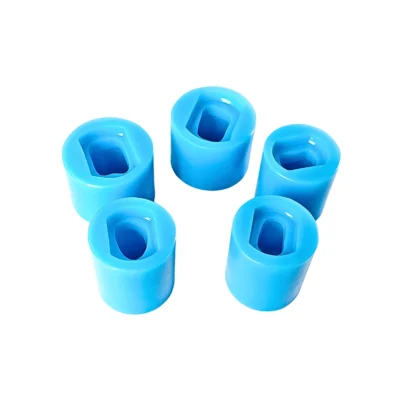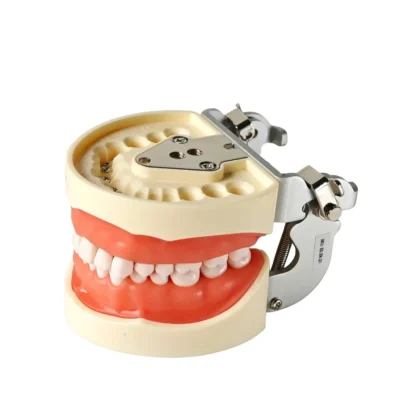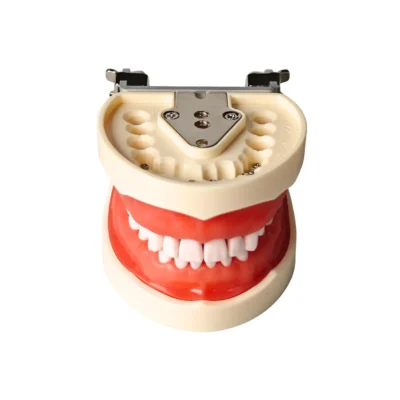
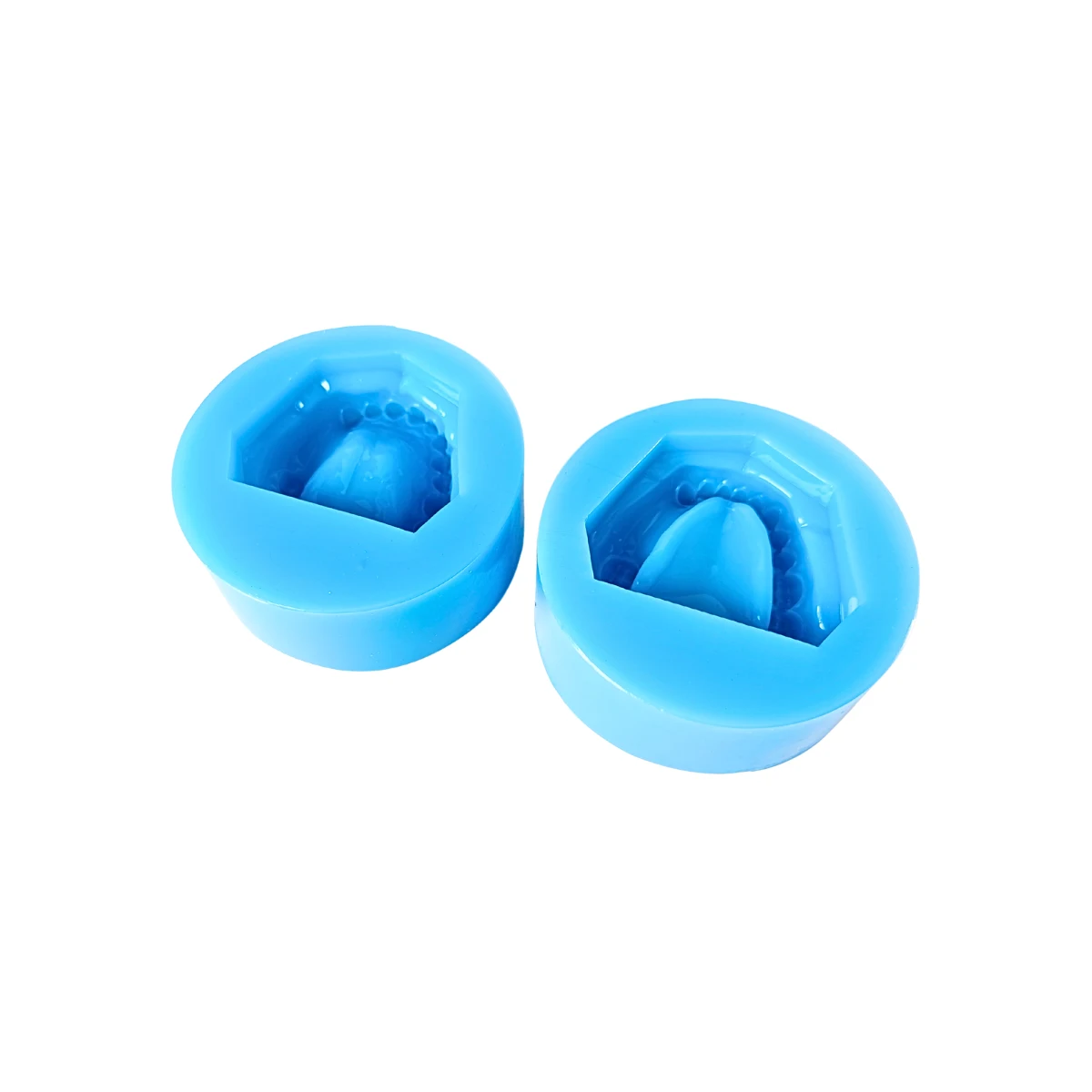
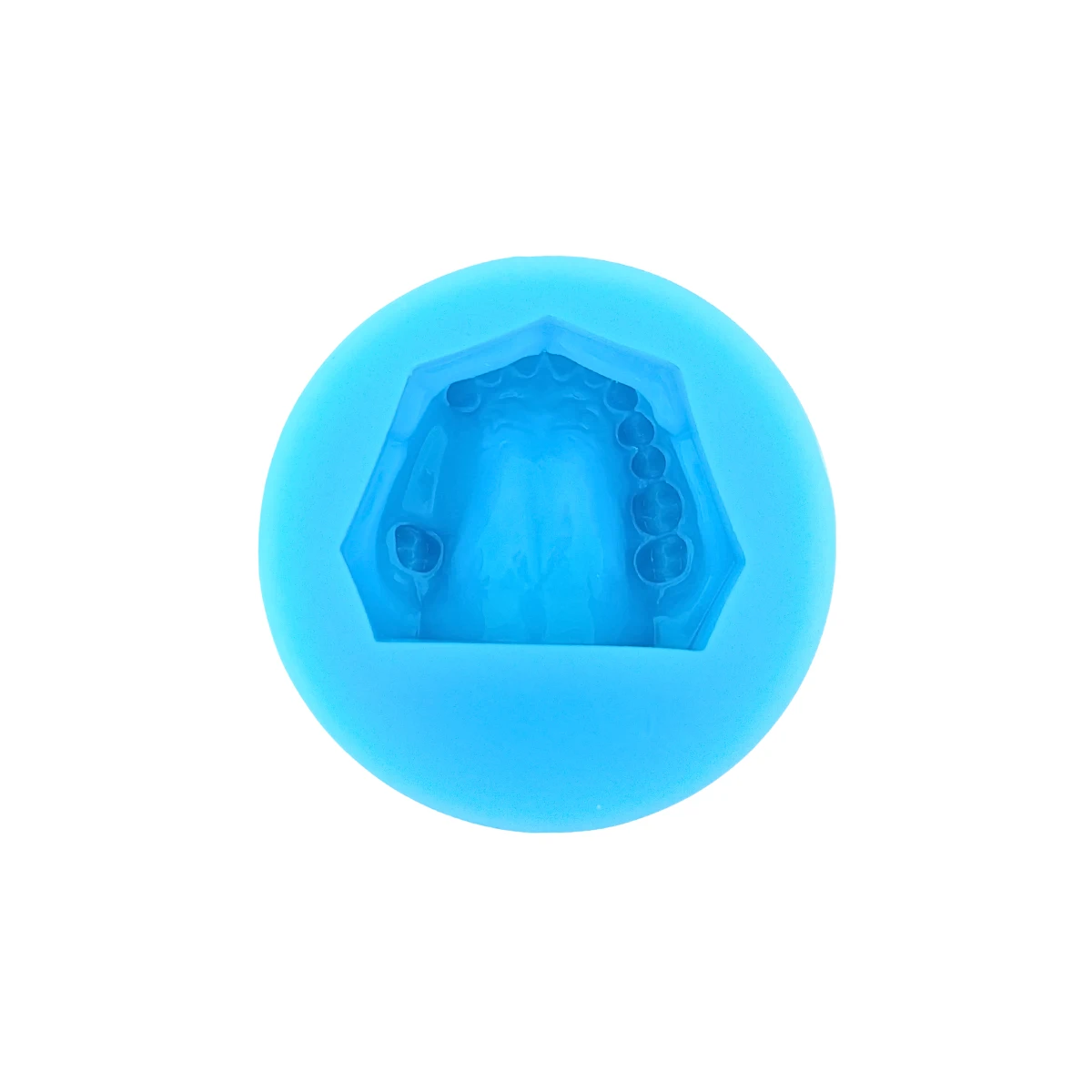
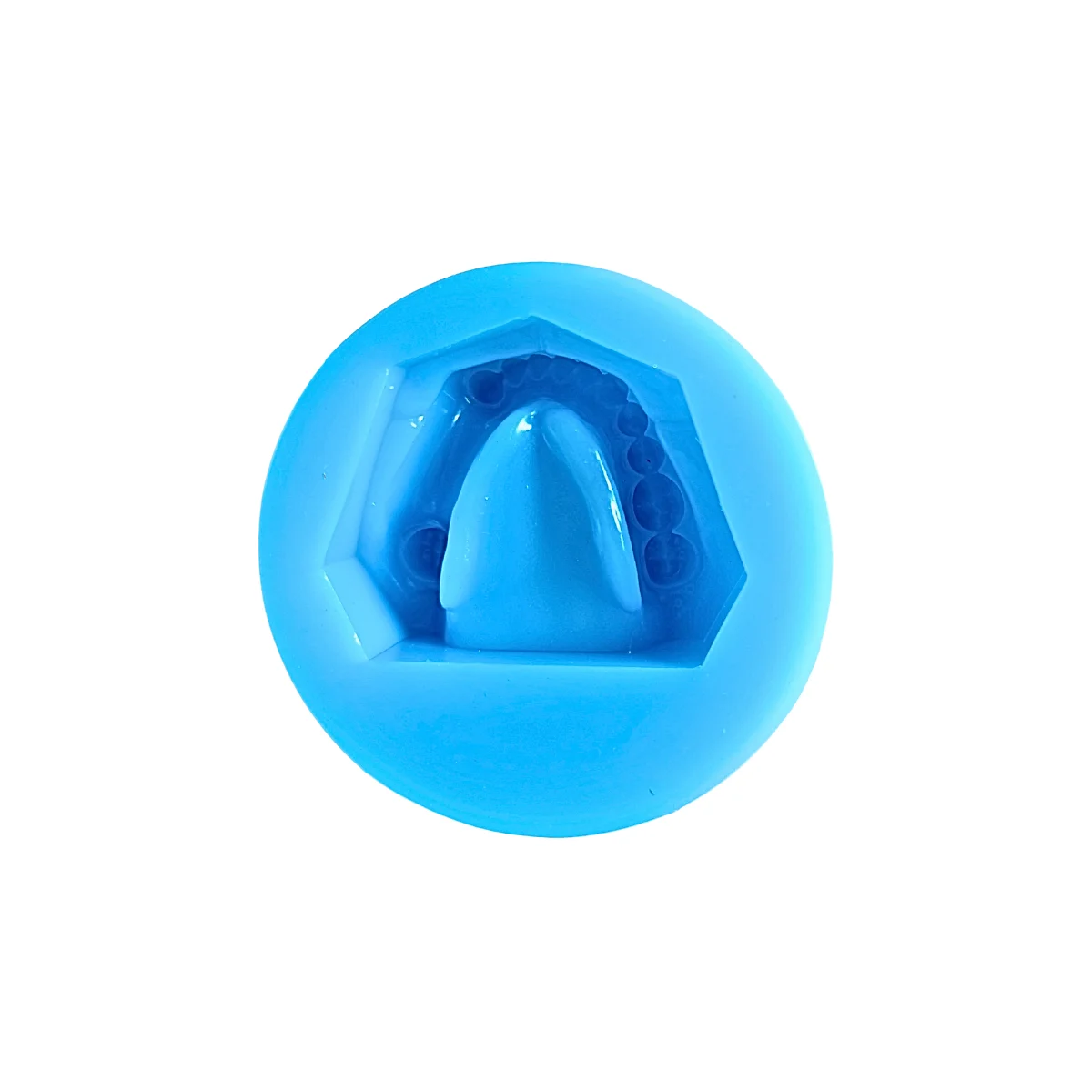
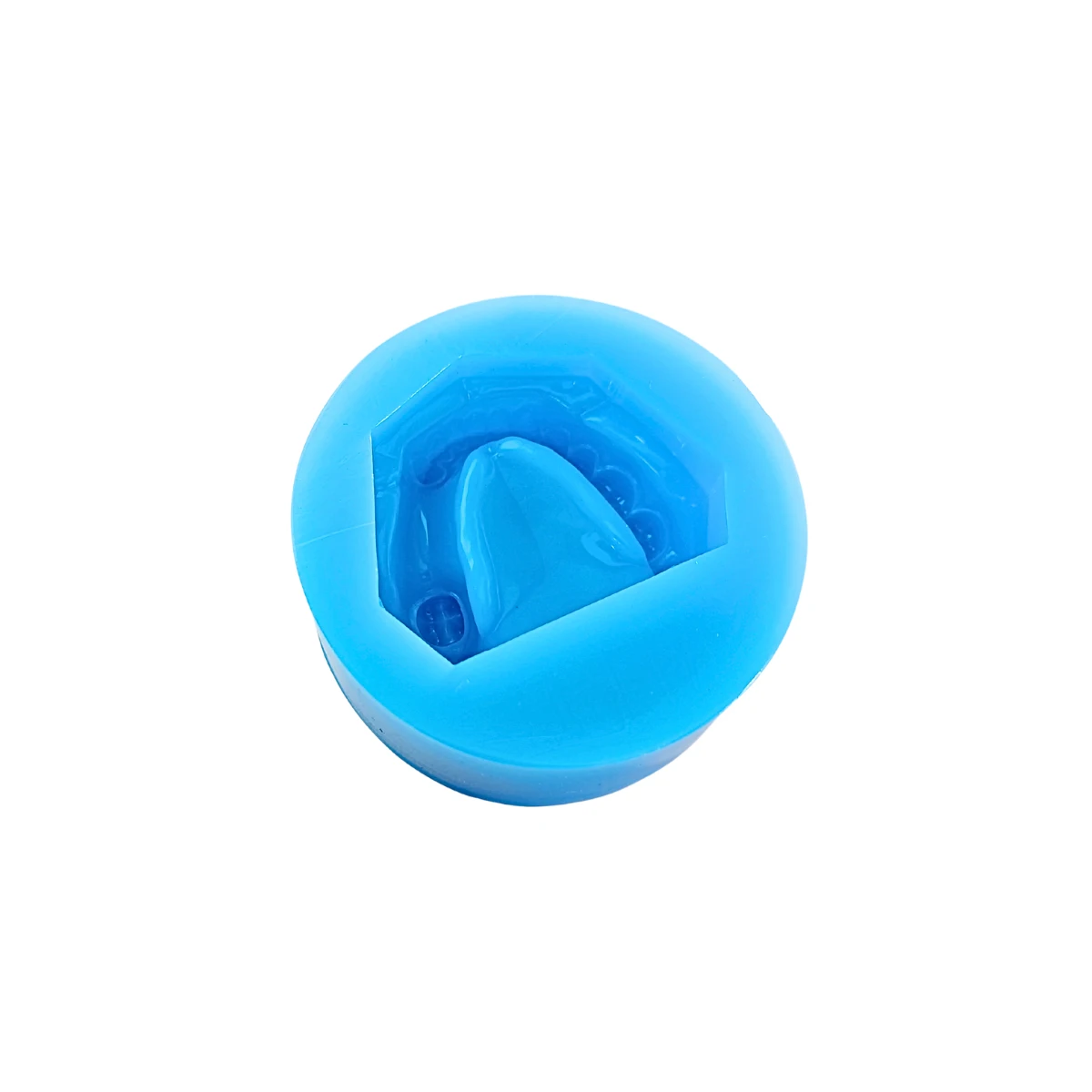
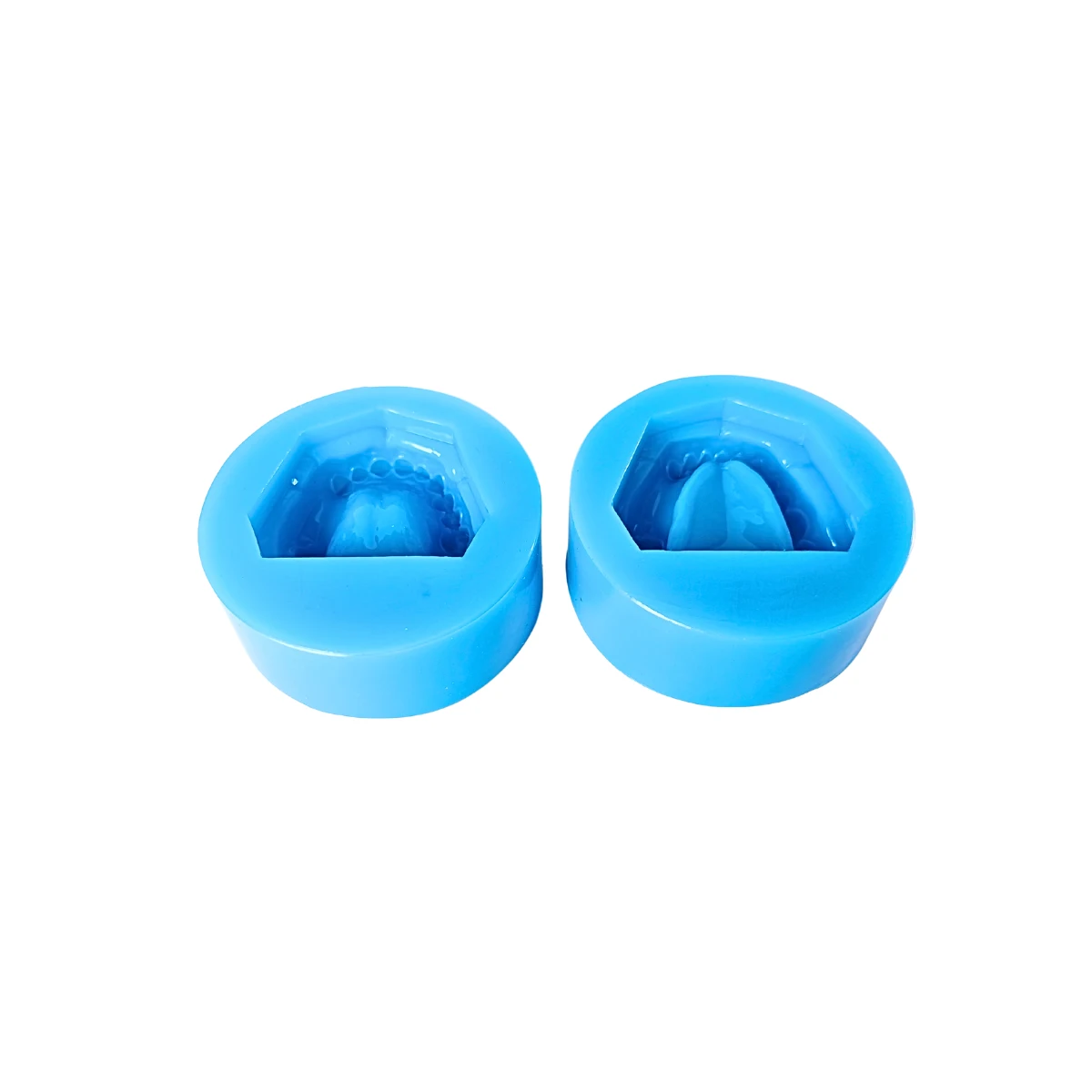
Evodent Partial Dentulous Silicone Plaster Mold, Upper and Lower Jaw Plaster Cast Former
Original price was: ₹5,000.00 INR.₹1,995.00 INRCurrent price is: ₹1,995.00 INR.
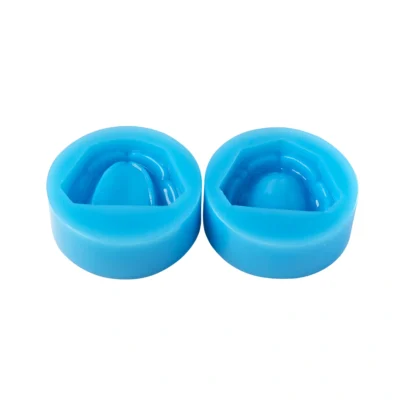
Reusable silicone dental mold for producing upper and lower partially edentulous plaster or dental stone models for prosthodontic training, partial denture teaching and dental laboratory exercises.
Shipping & Benefits
- International shipping available
- Tracking details shared by email
- Trusted by dental professionals worldwide
Description
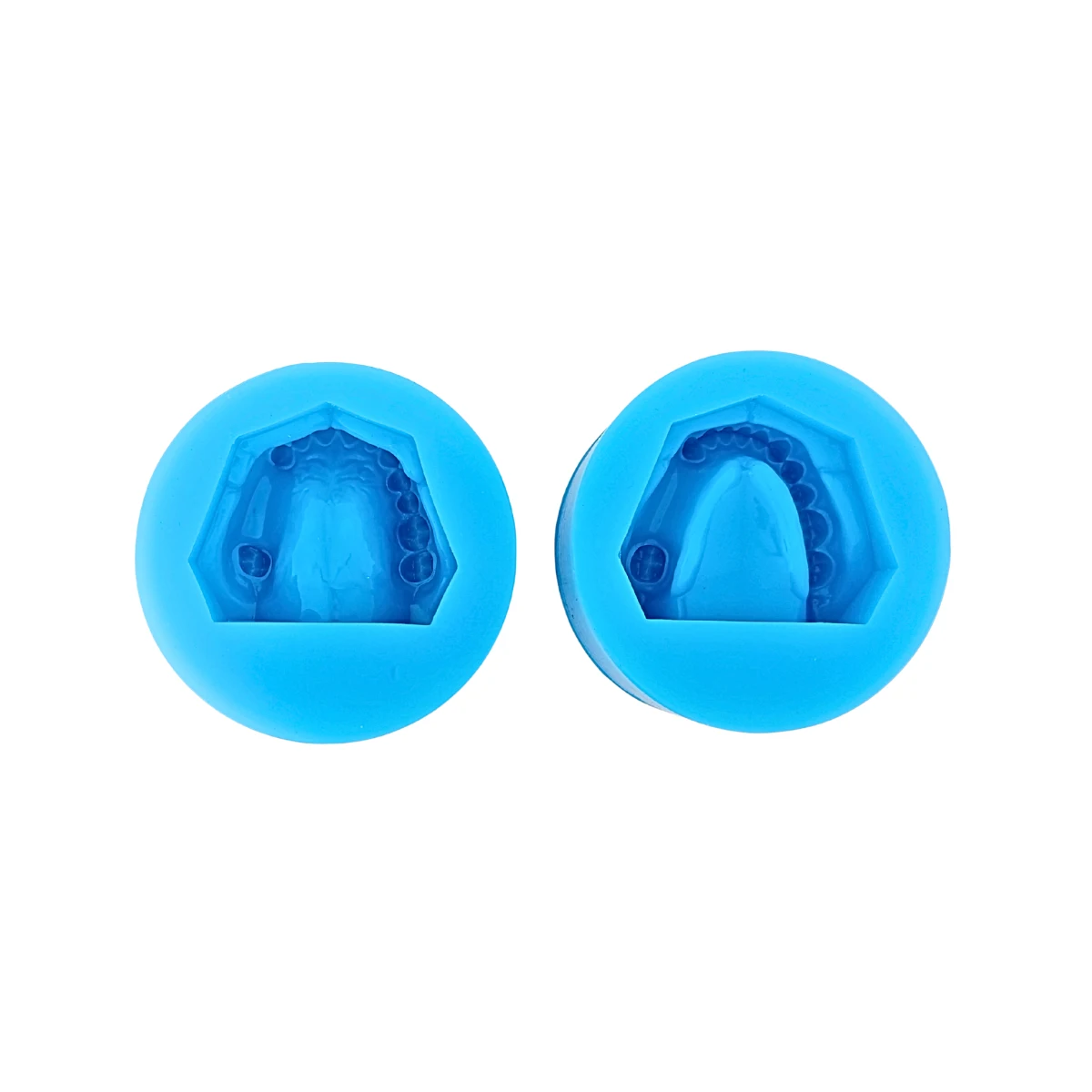
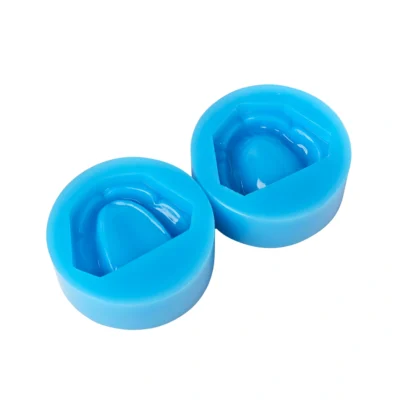
The Evodent Partial Dentulous Silicone Plaster Mold is a reusable upper and lower jaw dental mold designed for producing partially edentulous plaster or dental stone models.
The mold reproduces a dental arch where some teeth are present and selected areas are edentulous, making the finished casts useful for prosthodontic teaching, removable partial denture training, dental student exercises, model analysis and laboratory demonstrations.
Instead of purchasing multiple finished training models, dental colleges and training centers can use the same silicone mold to prepare fresh casts whenever required.
The product supplied is the dental silicone mold itself. Plaster, dental stone and the finished casts are not included.
What Can You Make With This Dental Silicone Mold?
The mold is designed to produce upper and lower jaw casts showing a partially edentulous dentition.
The resulting models can be used for:
- Prosthodontic teaching
- Partial denture concepts
- Removable partial denture training
- Dental student laboratory exercises
- Model analysis
- Arch-form demonstrations
- Understanding edentulous spaces
- Remaining-tooth and edentulous-area relationships
- Treatment-planning discussions
- Classroom demonstrations
- Practical training sessions
- Preparing multiple similar teaching casts
This makes the mold especially useful when an instructor wants several students to work with a consistent partially edentulous model configuration.
Why Use a Silicone Dental Mold Instead of Buying Finished Models?
The biggest advantage is that the mold lets you produce the model when you need it. For colleges, training institutes and laboratories, that can be more practical than repeatedly purchasing individual plaster models.
- Produce Models Repeatedly: Once a training cast has been used, damaged or modified during an exercise, another model can be poured using the same mold.
- Keep the Model Configuration Consistent: Students can work on models produced from the same mold, helping instructors maintain a more consistent training setup across a class or workshop.
- Make Only the Number of Models You Need: A single mold can be used to prepare models for a single student to a small training group.
- Flexible Demolding: The silicone body can be flexed around the set plaster or dental stone, making removal easier than with a rigid dental model mold. The exact service life depends on the casting material, handling, cleaning and storage.
Partially Edentulous Arch for Prosthodontic Training
A partially edentulous arch contains a combination of:
- Remaining teeth
- Missing-tooth spaces
- Edentulous areas
- Supporting dental arch structures
That makes the cast more relevant for partial denture and prosthodontic education than a fully dentulous model.
Students can use the resulting model to study or discuss:
- Distribution of remaining teeth
- Location and extent of edentulous spaces
- Relationships between teeth and edentulous areas
- Basic partially edentulous arch analysis
- Prosthodontic case presentation
- Partial denture design concepts
- Dental laboratory procedures
- Communication between dentist, student and laboratory
The exact procedure that can be carried out depends on the plaster or stone used and the teaching protocol.
Upper & Lower Jaw Dental Plaster Mold
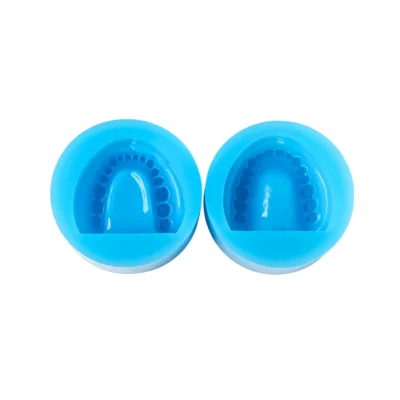
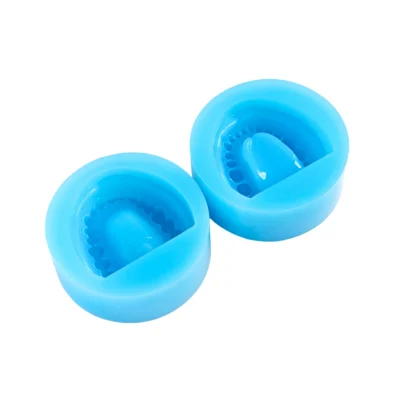
The product includes molds for both arches.
Upper Jaw Mold
The maxillary mold reproduces:
- Upper dental arch form
- Remaining teeth
- Edentulous spaces
- Palatal area
- Surrounding model base
Lower Jaw Mold
The mandibular mold reproduces:
- Lower dental arch form
- Remaining teeth
- Edentulous areas
- Lingual arch form
- Supporting model base
Having both arches allows the models to be used separately or together depending on the teaching exercise.
How to Make a Dental Plaster or Stone Models?
The exact mixing ratio and setting time should always follow the instructions for the plaster or dental stone you are using.
- Inspect the mold: Make sure the silicone dental mold is clean and free from old plaster or debris.
- Prepare the casting material: Mix the plaster or dental stone according to the material manufacturer’s recommended ratio.
- Fill the detailed areas first: Introduce a small amount of material into the tooth and narrow detail areas before filling the rest of the mold.
- Reduce trapped air: Gentle vibration or careful tapping can help the material flow into smaller details and reduce air bubbles.
- Fill the mold completely: Add material until the required model base is formed.
- Allow the cast to set fully: Do not remove the model before the material has achieved sufficient strength.
- Demold carefully: Flex the silicone away from the cast gradually rather than pulling the plaster model aggressively from the mold.
- Finish the model as required: Trim or refine the cast according to the training exercise.
Good pouring technique is important. Even a detailed silicone mold cannot compensate for poorly mixed material or air trapped around the tooth forms.
Tips for Better Plaster Casts
For cleaner and more consistent dental models:
- Use freshly mixed plaster or dental stone
- Follow the recommended powder-to-water ratio
- Avoid an excessively thick mix that cannot flow into details
- Introduce material gradually into the tooth areas
- Use gentle vibration where available
- Avoid trapping air around narrow tooth forms
- Allow the cast to set fully before removal
- Flex the silicone rather than forcing the finished model out
- Clean the mold after each casting session
- Store the mold away from sharp instruments and excessive heat
These small steps can make a noticeable difference to the quality of the finished dental cast.
Useful for Dental Colleges & Prosthodontic Departments
This silicone dental model mold is particularly useful where similar training models need to be produced repeatedly. Typical users include:
- Dental colleges
- Prosthodontic departments
- Dental students
- Dental laboratory departments
- Dental technicians
- Dental educators
- Private dental training institutes
- Practical training centres
- Hands-on workshops
For an institution, the advantage is not simply producing a plaster model. It is being able to reproduce the same partially edentulous training configuration when additional models are required.
Partial Denture & Prosthodontic Applications
Models produced from the mold can support teaching around topics such as:
- Partially edentulous arch recognition
- Removable partial denture concepts
- Prosthodontic model analysis
- Dental cast examination
- Edentulous-space identification
- Remaining-tooth evaluation
- Laboratory communication
- Student case discussion
- Demonstration of prosthodontic principles
The mold itself is not a finished partial denture practice model. It is the model-making tool used to produce the casts on which the chosen teaching exercise can be performed.
Silicone Mold vs Finished Plaster Model
A finished plaster model is ready to use once purchased, but it is generally a single physical cast. A silicone plaster mold serves a different purpose. With the mold, you can:
- Create a new cast when required
- Produce several similar models
- Replace models that have been damaged during training
- Prepare casts using the material appropriate for your exercise
- Maintain a consistent model design across multiple students
For repeated teaching or institutional training, that can be considerably more useful than relying only on individual finished models.
Key Features
- Partial Dentulous Silicone Plaster Mold
- Upper and lower jaw molds
- Flexible silicone construction
- Produces partially edentulous dental models
- Suitable for plaster and appropriate dental stone casting
- Reproduces remaining teeth and edentulous spaces
- Useful for prosthodontic education
- Suitable for partial denture teaching
- Designed for repeated dental model production
- Useful for dental student laboratory exercises
- Suitable for dental colleges and training institutes
- Allows multiple casts to be produced from the same model form
- Finished plaster model is not included
Technical Specifications
- Product Type: Silicone dental model mold
- Product Description: Partial Dentulous Silicone Plaster Mold
- Dental Condition: Partially edentulous
- Arch Forms: Upper and lower jaw
- Material: Silicone
- Model Produced: Partially edentulous dental cast
- Casting Material: Suitable plaster or dental stone
- Primary Application: Dental model production
- Training Application: Prosthodontics and partial denture education
- Suitable Users: Dental students, colleges, prosthodontic departments, educators and training laboratories
- Finished Cast Included: No
- Plaster / Dental Stone Included: No
- Reuse: Intended for repeated casting with appropriate handling
- Use Environment: Dental college, laboratory, classroom, training centre or workshop
FAQs – Evodent Partial Dentulous Silicone Plaster Mold
Q. What is a Partial Dentulous Silicone Plaster Mold used for?
A. It is a silicone dental mold used to produce upper and lower partially edentulous plaster or dental stone models. The finished casts can be used for prosthodontic teaching, partial denture education, dental student training and laboratory exercises.
Q. Does the product include both upper and lower jaw molds?
A. Yes. The set is designed to produce both maxillary and mandibular partially edentulous dental models.
Q. Is this a finished dental plaster model?
A. No. This product is the reusable silicone mold. Plaster or suitable dental stone must be poured into it to create the finished dental cast.
Q. Can this dental mold be used with dental stone?
A. It can be used with suitable dental plaster or stone materials appropriate for model casting. Mixing, setting and handling should follow the instructions provided by the casting-material manufacturer.
Q. What type of dental model does the mold produce?
A. It produces a partially edentulous dental model, meaning the resulting arch contains both remaining teeth and edentulous or missing-tooth areas.
Q. Can the resulting casts be used for partial denture training?
A. Yes. The casts can support prosthodontic and partial denture-related teaching, model analysis and laboratory exercises. The exact procedure possible depends on the cast material and teaching protocol.
Q. Can multiple plaster models be produced from the same silicone mold?
A. Yes. The silicone mold is intended for repeated model production when it is handled, cleaned and stored correctly. Actual service life depends on use and casting conditions.
Q. How do I reduce air bubbles while pouring the dental mold?
A. Introduce the casting material gradually, fill detailed tooth areas carefully and use gentle vibration or tapping where appropriate. Following the correct mixing ratio for the plaster or dental stone also helps improve flow and detail reproduction.
Q. Who is this silicone dental mold designed for?
A. It is particularly useful for dental colleges, prosthodontic departments, dental students, dental laboratory training, educators and institutes that need repeatable partially edentulous casts.
You may also like…
- Sale!

Evodent Pediatric Dental Cast Mold – Primary Teeth, Upper and Lower Jaw, Dental Plaster Mould
Original price was: ₹5,000.00 INR.₹2,495.00 INRCurrent price is: ₹2,495.00 INR. - Sale!
Evodent Six Times Silicone Mold for Crown and Plaster Cast Making – Teeth 11, 13, 14, 15, 16, 17 – 13
Original price was: ₹3,000.00 INR.₹1,995.00 INRCurrent price is: ₹1,995.00 INR. - Sale!
Evodent Edentulous Denture Mold, Silicone Dental Cast Mold – Upper and Lower Jaw
Original price was: ₹5,000.00 INR.₹1,995.00 INRCurrent price is: ₹1,995.00 INR. - Sale!
Evodent Dentulous Mold Silicone Dental Cast Mold – Upper and Lower Jaw
Original price was: ₹5,000.00 INR.₹1,995.00 INRCurrent price is: ₹1,995.00 INR.
Related products
- Sale!
Evodent Root Canal Curvature Training Blocks (Pack of 3) – Straight, Moderate & Severe Curved Canal Models for Endodontic Practice
Original price was: ₹2,000.00 INR.₹995.00 INRCurrent price is: ₹995.00 INR. - Sale!
Evodent Typodont Teeth with Metal Root and Tooth Color Crown, For Orthodontic Training, Set of 28 Teeth
Original price was: ₹20,000.00 INR.₹9,990.00 INRCurrent price is: ₹9,990.00 INR. - Sale!
Evodent Six Times Silicone Mold for Crown and Plaster Cast Making – Teeth 11, 13, 14, 15, 16, 17
Original price was: ₹3,000.00 INR.₹1,995.00 INRCurrent price is: ₹1,995.00 INR. - Sale!
Evodent 200 PRO SG TN Dental Typodont Model with Tooth Number – 32 Teeth, Soft Gingiva, Nissin 200 Compatible Training Typodont
Original price was: ₹5,000.00 INR.₹2,500.00 INRCurrent price is: ₹2,500.00 INR.